

Outdoor furniture materials: which to choose so they last for years
Choosing outdoor furniture goes far beyond aesthetics. A terrace, garden, or penthouse is exposed daily to sun, humidity, temperature changes, and even salinity in coastal areas. Therefore, one of the most important factors when investing in outdoor furniture is knowing the materials it is made from.
Quality furniture not only stands out for its design but also for its ability to maintain its appearance and functionality for many years. Knowing which materials offer greater resistance and require less maintenance will help you make an informed decision and enjoy your outdoor space for much longer.
Why is the material so important?
Unlike indoor furniture, outdoor furniture must constantly face conditions that accelerate wear and tear.
Prolonged exposure to UV rays can deteriorate colors and finishes, while humidity promotes corrosion or deformation in poorly prepared materials. Additionally, factors such as wind, rain, or proximity to the sea demand especially resistant solutions.
For this reason, premium outdoor furniture manufacturers opt for technical materials that combine durability, design, and ease of maintenance.
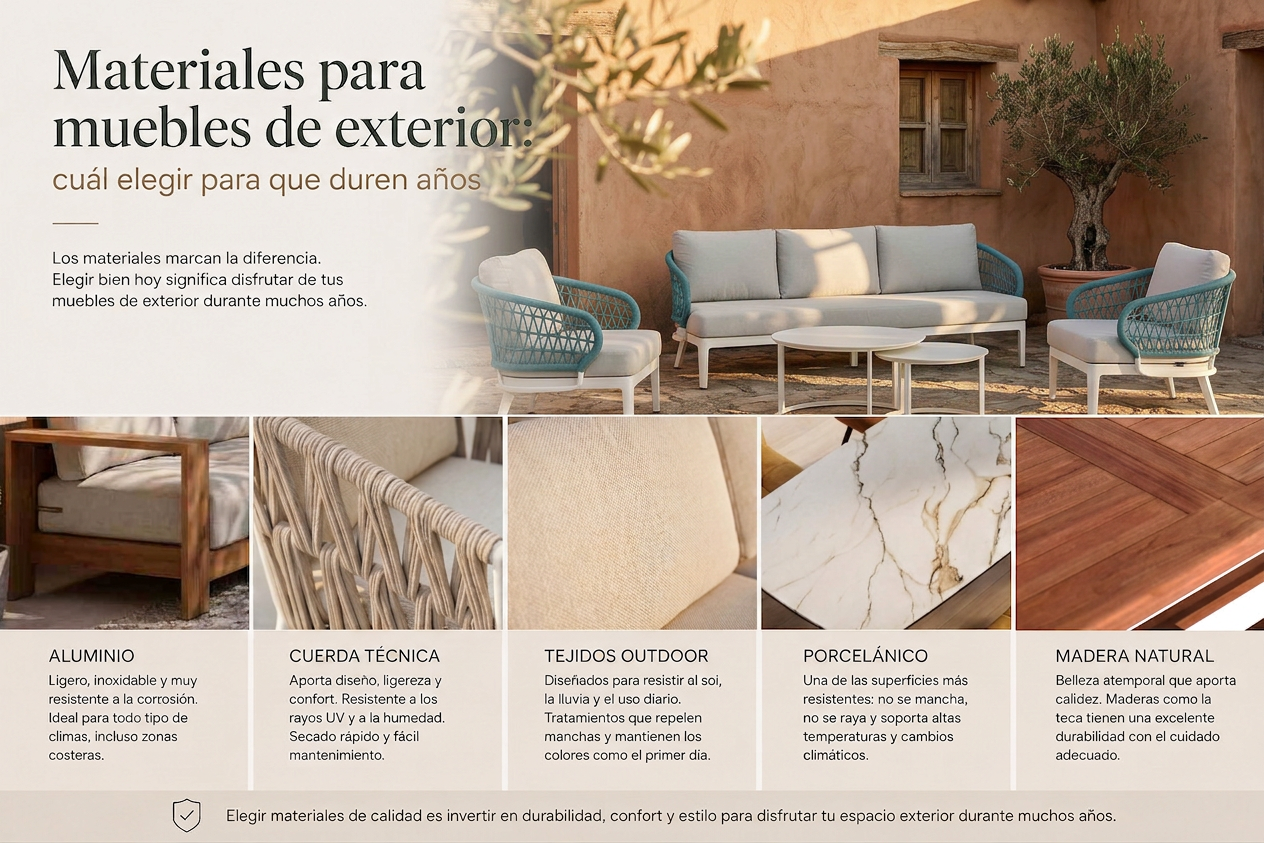
Aluminum: lightness, resistance, and contemporary design
Aluminum has become one of the most widely used materials in high-end outdoor furniture.
Its main advantage is that it does not rust, making it an ideal option for terraces, gardens, and especially for homes located in coastal areas. Furthermore, it is a lightweight material that facilitates furniture mobility without compromising its stability.
Thanks to high-quality powder coating treatments, aluminum furniture maintains its appearance for years and requires minimal maintenance.
Advantages of aluminum
- High corrosion resistance.
- Lightweight and easy to move.
- Very simple maintenance.
- Wide variety of designs and finishes.
- Ideal for humid areas or near the sea.
Technical rope: comfort and natural aesthetics
Technical rope has established itself as one of the major trends in outdoor furniture design.
Its appearance provides warmth and a sophisticated style, while its composition is specifically designed to withstand outdoor exposure. The materials used in its manufacture offer high resistance to UV rays, humidity, and temperature changes.
Furthermore, it allows for the creation of light and visually appealing designs that fit perfectly in contemporary and Mediterranean environments.
Advantages of technical rope
- Excellent outdoor resistance.
- Great aesthetic appeal.
- Quick drying.
- Light and elegant visual feel.
- Easy maintenance.
Technical outdoor fabrics: worry-free comfort
One of the most important advances in outdoor furniture has been the development of fabrics specifically designed to withstand climatic conditions.
Current textiles offer resistance to humidity, protection against solar rays, and a great ability to retain their original colors. Additionally, many of them incorporate stain-resistant and quick-drying treatments.
Thanks to these features, it is now possible to enjoy outdoor sofas, armchairs, and cushions with a level of comfort very similar to that of indoor furniture.
What to look for in an outdoor fabric
- UV protection.
- Moisture resistance.
- Easy cleaning.
- High durability.
- Color retention over time.
Porcelain surfaces: elegance and maximum resistance
Tables with porcelain tops have become one of the most valued options within high-end outdoor furniture.
Porcelain offers extraordinary resistance to temperature changes, stains, scratches, and sun exposure. Additionally, its maintenance is extremely simple, as only water and neutral soap are needed to keep it in perfect condition.
Another advantage is the wide variety of finishes available, capable of reproducing the appearance of natural stone, cement, or mineral materials with great fidelity.
Advantages of porcelain
- Resistance to heat and frost.
- Does not lose color in the sun.
- High hardness against impacts and scratches.
- Easy cleaning.
- Elegant and contemporary appearance.
Natural wood: timeless beauty with proper maintenance
Wood remains one of the most appreciated options for those seeking a warm and natural ambiance.
It is a material capable of adding personality and elegance to any terrace or garden. However, it requires certain care to preserve its original appearance over time.
Woods like teak stand out for their excellent outdoor performance thanks to their natural oils and resistance to humidity. With proper periodic maintenance, they can remain in excellent condition for decades.
Advantages of wood
- Warm and natural aesthetic.
- High durability in high-quality species.
- Elegant aging.
- Perfect for Mediterranean and natural environments.
Things to consider
- Requires periodic maintenance.
- May change its tone with sun exposure.
- Needs specific treatments to preserve its original finish.

Which material to choose if you live near the sea?
Homes located in coastal areas require special attention due to environmental salinity.
In these cases, treated aluminum, technical rope, high-quality outdoor fabrics, and porcelain surfaces usually offer the best long-term results. These materials are specifically prepared to withstand humid environments and minimize the effects of corrosion and wear.
Although wood can also be used, it is advisable to commit to more frequent maintenance to ensure its preservation.
Material quality is a long-term investment
When choosing outdoor furniture, it is common to focus on design or price. However, the material is the element that will truly determine how the furniture performs over the years.
Investing in quality materials means enjoying furniture that is more resistant, more comfortable, and with an aesthetic that remains intact season after season.
Aluminum, technical rope, outdoor fabrics, porcelain, or high-quality wood are options capable of offering excellent results when they are part of furniture specifically designed for outdoor living.
Because good outdoor furniture shouldn't just look good on the first day. It should continue to do so many years later.