

How to design a small terrace without sacrificing comfort
Having a small terrace doesn't mean giving up on enjoying a comfortable, functional, and stylish outdoor space. In fact, it's often the smaller spaces that best utilize every design detail to create cozy and balanced atmospheres.
With proper planning, intelligent furniture selection, and a few decorative resources, a terrace of just a few square meters can become one of the most special corners of the home.
The key is not in the size, but in how the available space is used.
Think before decorating
One of the most common mistakes when furnishing a small terrace is buying furniture without a clear idea of the space's primary function.
Before choosing any piece, it's worth asking:
- Will it be a relaxation area?
- Will it be used for outdoor dining?
- Will it be a space for gatherings with friends?
- Are we looking for a reading or unwinding corner?
Defining the primary use will help make more informed decisions and prevent overloading the terrace with unnecessary elements.
Fewer furniture pieces, more space to enjoy
When space is limited, every piece counts.
The current trend favors visually uncluttered spaces where furniture provides functionality without saturating the environment.
It is preferable to invest in a few quality pieces than to fill the terrace with furniture that hinders circulation.
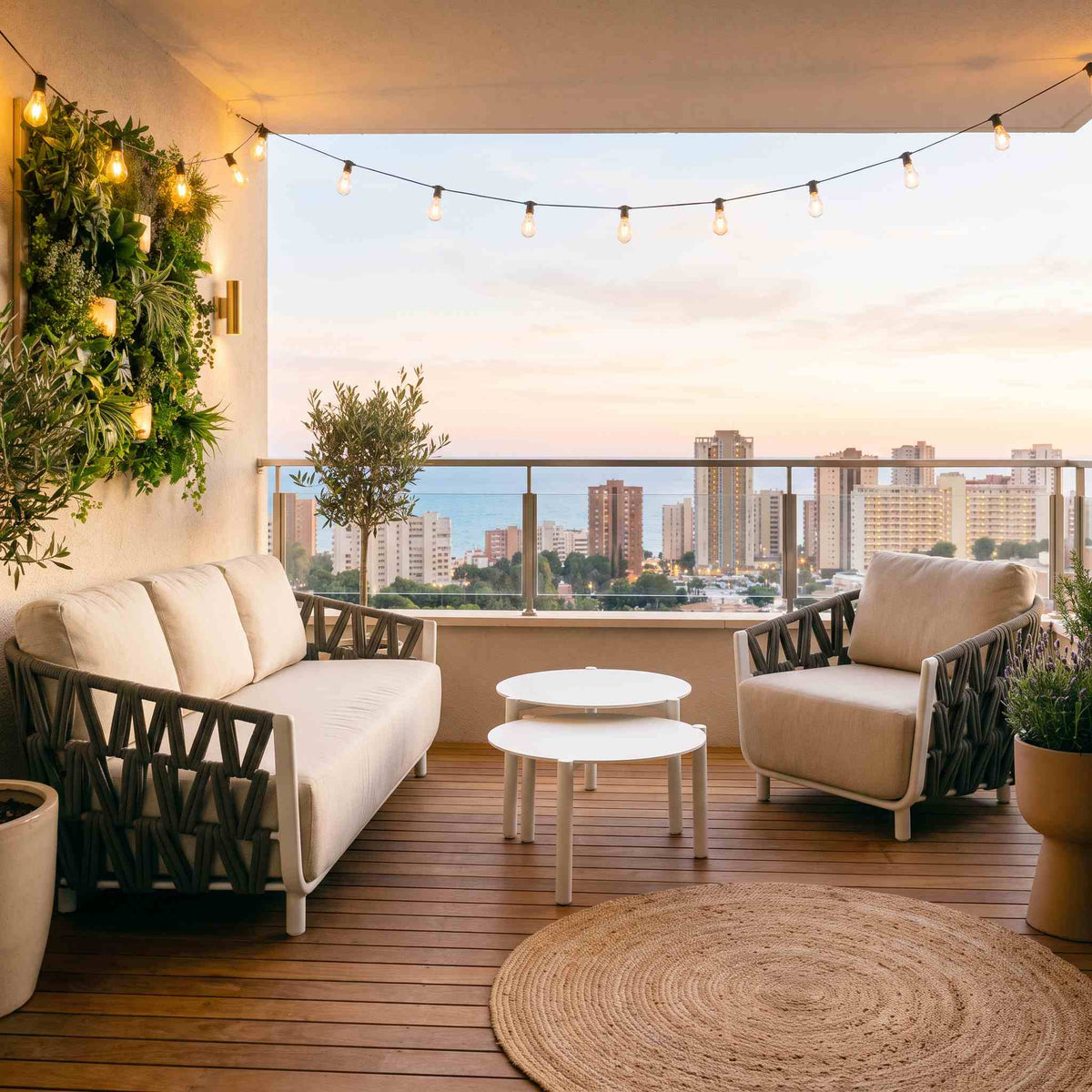
A compact outdoor sofa accompanied by a side table can be much more comfortable and elegant than an excessively cluttered layout.
Choose furniture proportionate to the space
One of the secrets to making a small terrace appear larger is respecting proportions.
Overly large furniture creates a sense of overwhelm and reduces the overall functionality. Conversely, lightweight design pieces help maintain a more open visual perception.
Some particularly recommended options include:
Compact outdoor sofas
Offer comfort without taking up more space than necessary.
Lightweight armchairs
Allow for additional seating while maintaining a light visual appeal.
Multifunctional side tables
Can be used as support, a decorative surface, or even occasional seating.
Modular sets
Allow the layout to be adapted to changing needs.
Utilize verticality
When horizontal space is limited, walls become great allies.
Incorporating vertical elements allows for decoration and adds personality without taking up useful floor space.
Some ideas include:
- Vertical gardens.
- Lightweight shelves.
- Hanging planters.
- Wall lighting.
- Decorative panels.
In addition to optimizing space, these resources help create a sense of greater depth.
Light colors to gain spaciousness
The choice of colors directly influences how we perceive the size of a space.
Light tones reflect light better and provide a wider and brighter visual sensation.
The colors that work best on small terraces are:
- Off-white.
- Sand.
- Beige.
- Soft gray.
- Stone tones.
These shades also fit perfectly with current contemporary Mediterranean design trends.
Create a sense of continuity with the interior
A very effective strategy to visually enlarge a small terrace is to maintain aesthetic coherence with the interior of the home.
When materials, colors, and decorative styles interact, the space feels larger and more fluid.
The transition between interior and exterior becomes natural, making both environments perceived as a single room.
Lighting also expands spaces
Lighting has the ability to completely transform a terrace.
Well-designed lighting provides depth, warmth, and a sense of spaciousness, especially during nighttime hours.
The most commonly used solutions include:
- Decorative string lights.
- Portable outdoor lamps.
- Indirect lighting.
- Wall sconces.
- Decorative lanterns.
Combining several light sources creates much more inviting atmospheres than a single intense light source.
Incorporate vegetation without saturating
Plants bring life, freshness, and personality, but in small spaces, it's important to use them with balance.
Instead of placing numerous pots on the ground, it is advisable to opt for:
- Raised planters.
- Linear planters.
- Vertical plants.
- Lightweight plant species.
This achieves the desired natural effect without losing usable space.
Durable and easy-to-maintain materials
On a small terrace, every element is more visually exposed. Therefore, it is especially important to choose materials that maintain their impeccable appearance for years.
Aluminum, technical rope, outdoor fabrics, and porcelain surfaces offer an excellent combination of resistance, design, and ease of maintenance.
Furthermore, their lightweight lines and contemporary finishes help create visually larger spaces.
Comfort does not depend on square footage
There is a misconception that only large terraces can become comfortable and sophisticated spaces. However, the reality proves quite the opposite.
A well-designed space, with appropriate furniture, quality materials, and intelligent distribution, can offer an extraordinary user experience regardless of its size.
Because true luxury is not always measured in square meters, but in the ability to create places where one wants to be.
And when every element is carefully chosen, even the smallest terrace can become the favorite corner of the house.